KAHLA 75 PFENNIG SERIES NOTES 1921 |
On this page you will find a set of small denomination German Series Notes (Serienscheine) printed and distributed by the town of Kahla in 1921. This is an interesting series of notes bearing cartoon illustrations with short sociopolitical themed messages. These cartoons are signed Olaf G. and are the work of well known Norwegian artist, painter, cartoonist and caricaturist, illustrator Olaf Gulbransson (1873 - 1958). The work on this page is a good example of his post World War I propaganda. |
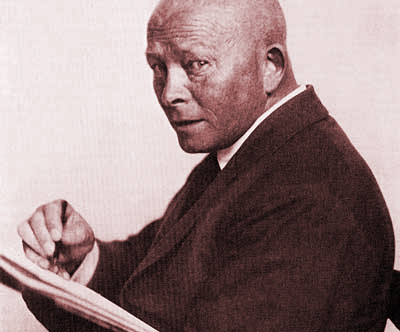
Born in Christiana Norway in 1873 the son of a book printer, Olaf Gulbransson became an artist particularly known for Caracatures. He found success early on in his career working for mostly norwegian satirical magazines. He was a major contributor to the magazine Simplicissimus and would continue to work with that publication until its final issue in 1944 (well after it became a vehicle for national-socialist propaganda)
After some time studying in Paris he moved to Munich Germany in 1906 where he was drafted into the German miltary in 1916. He worked in the department of propaganda in Berlin where he also became a member of the Arts Academy.
After the war he became a professor at the State Art School in Munich and continued to publish and exhibit his work. He remained quite celebrated in his later life and his work has proven quite influencial. He died in 1958 at the age of 86. |
|
COMMON REVERSE
KAHLA NOTES |
DETAIL
|
|
|
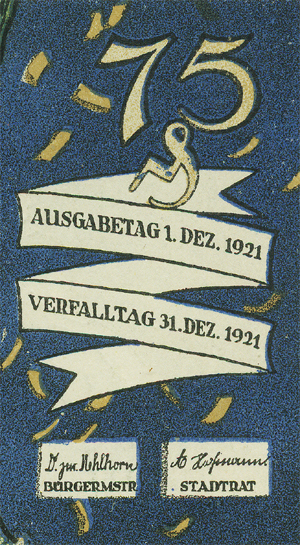
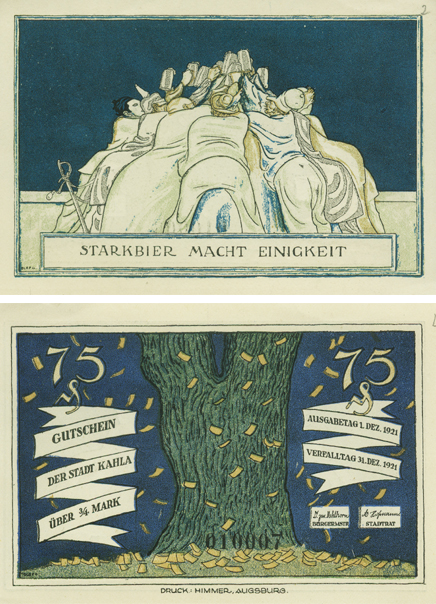
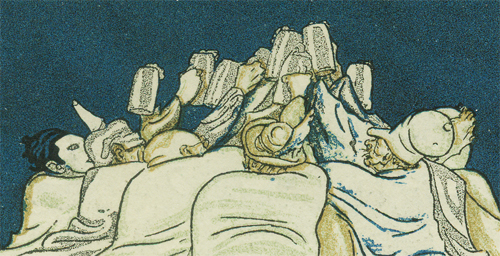
Gutschein der Stadt Kahla 75 pf. (Credit Note for the city of Kahla about 3/4 Mark or 75 pfennig): Depicted on the obverse: men of different nationalities toasting beer - Starkbier Macht Einigkeit (Strong Beer, unity and power) / Depicted on the Reverse is a tree with notes falling like leaves / Ausgabetag 1, Dez. 1921 - Verfalltag 31, Dez. 1921 (Issued Dec 1, 1921 - Expires Dec. 31, 1921) / Signed by the Mayor and Council representative / illustration signed Olaf G. (artist: Olaf Gulbransson) |
DETAIL
|
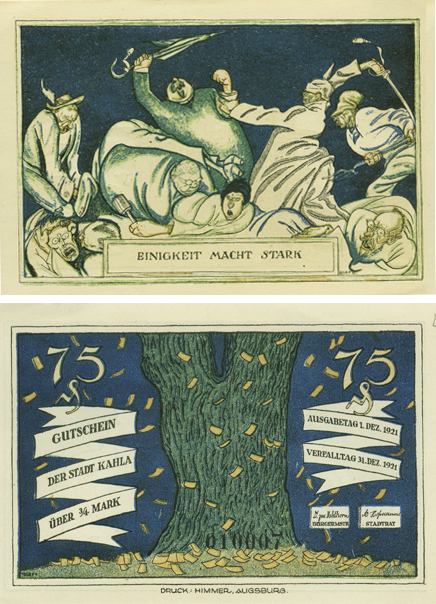
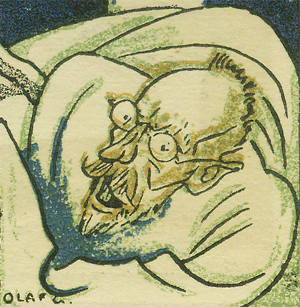
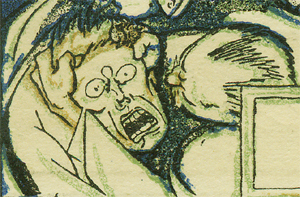
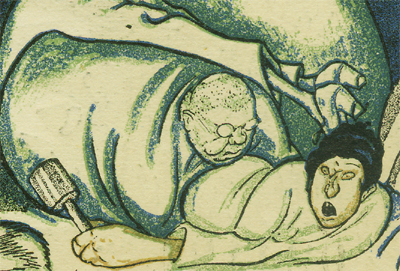
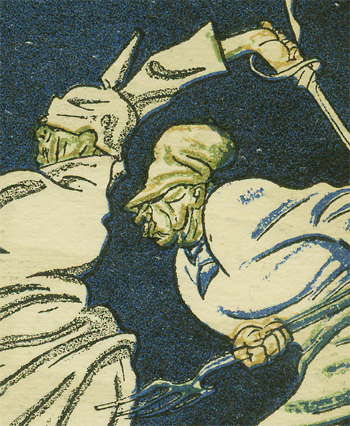
Gutschein der Stadt Kahla 75 pf. (Credit Note for the city of Kahla about 3/4 Mark or 75 pfennig): Depicted on the obverse: Same men from the first note now fighting - Eingkeit Macht Stark (Unity is Stregth) / Depicted on the Reverse is a tree with notes falling like leaves / Ausgabetag 1, Dez. 1921 - Verfalltag 31, Dez. 1921 (Issued Dec 1, 1921 - Expires Dec. 31, 1921) / Signed by the Mayor and Council representative / illustration signed Olaf G. (artist: Olaf Gulbransson) |
DETAIL
|
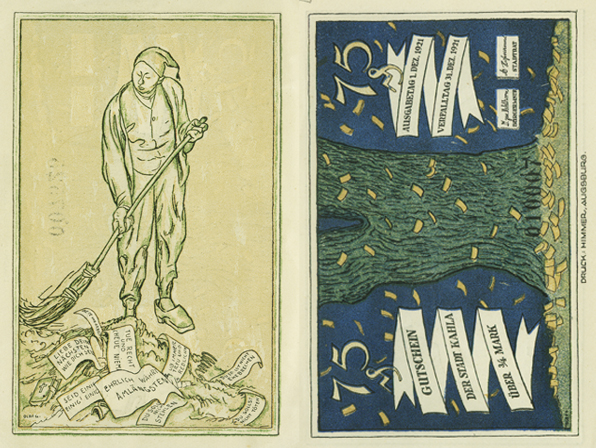
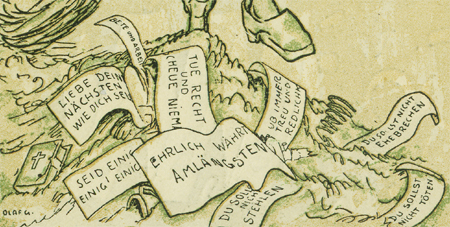
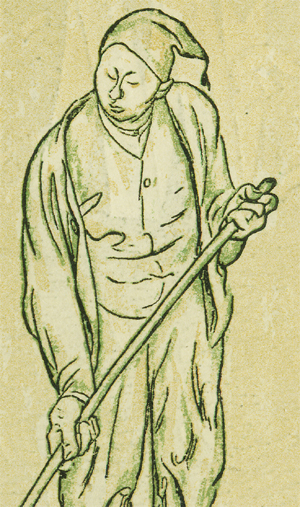
Gutschein der Stadt Kahla 75 pf. (Credit Note for the city of Kahla about 3/4 Mark or 75 pfennig): Depicted on the obverse: Man (with cap) Sweeping up garbage. Garbage has a bible and notes which read: 1. Seid einig! einig! einig! (Be united! united! united!) 2. Liebe deinen Nächsten wie dich selbst (Love your neighbor as yourself - Leviticus 19:18) 3. Tue recht und scheue niemand (Do right and fear no man) 4. Du sollst nicht ehebrechen (Thou shalt not commit adultery) / Depicted on the Reverse is a tree with notes falling like leaves / Ausgabetag 1, Dez. 1921 - Verfalltag 31, Dez. 1921 (Issued Dec 1, 1921 - Expires Dec. 31, 1921) / Signed by the Mayor and Council representative / illustration signed Olaf G. (artist: Olaf Gulbransson) |
DETAIL
|
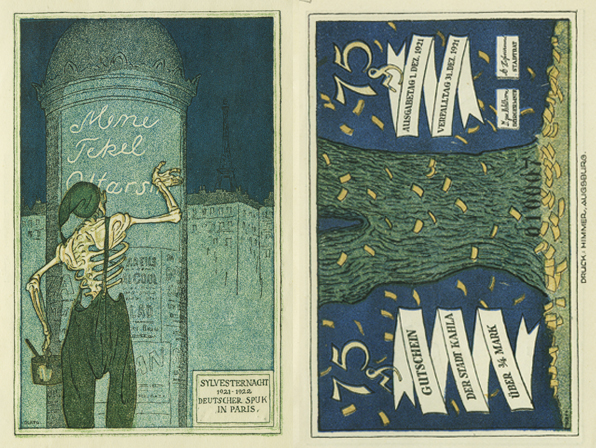
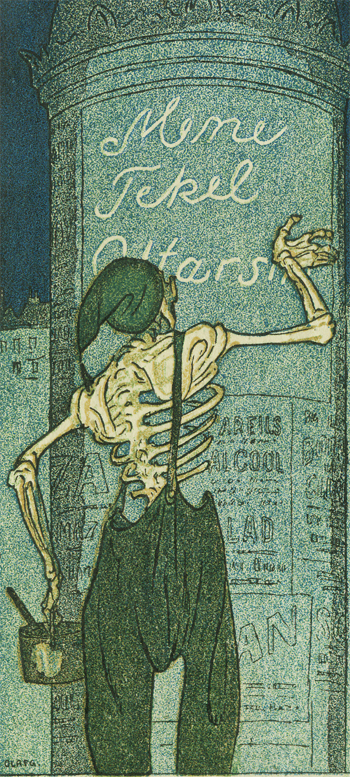
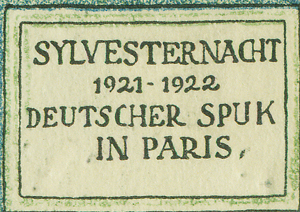
Gutschein der Stadt Kahla 75 pf. (Credit Note for the city of Kahla about 3/4 Mark or 75 pfennig): Depicted on the obverse: Skeletal man in cap with paint writing "Mene, Mene, Tekel u-Pharsin" on a pillar in France. These words are the same words that appear on the wall in the palace of Belshazzar King of Babylon. In this biblical tale, these words appear as they drink wine from sacred golden and silver vessels which had been removed from Solomon's Temple in Jerusalem by his predecessor Nebuchadnezzar. Only Daniel can read these words given by god. The words foretold the destruction of the Kingdom.: Sylvesternacht 1921-1922 Deutscher Spuk in Paris (New Years Eve 1921-1922 Germans Spit in Paris) / Depicted on the Reverse is a tree with notes falling like leaves / Ausgabetag 1, Dez. 1921 - Verfalltag 31, Dez. 1921 (Issued Dec 1, 1921 - Expires Dec. 31, 1921) / Signed by the Mayor and Council representative / illustration signed Olaf G. (artist: Olaf Gulbransson) |
DETAIL
|
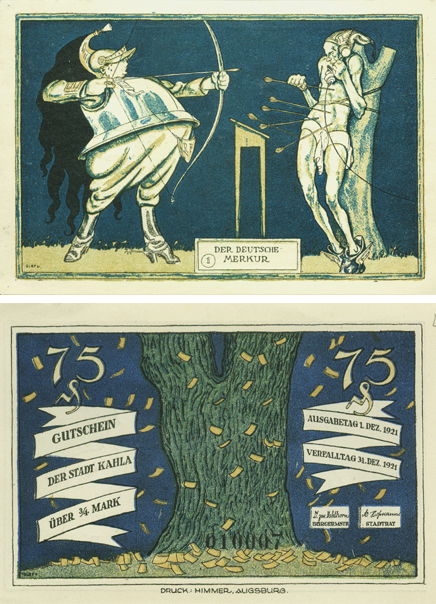
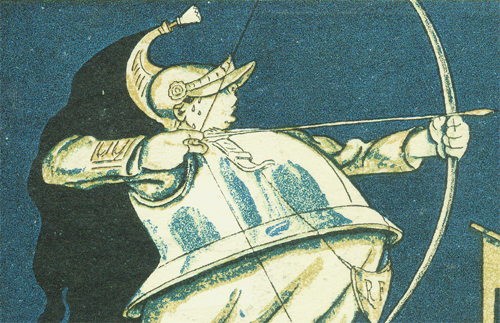
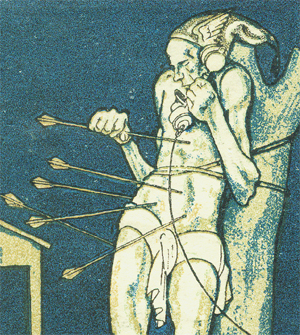
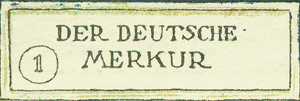
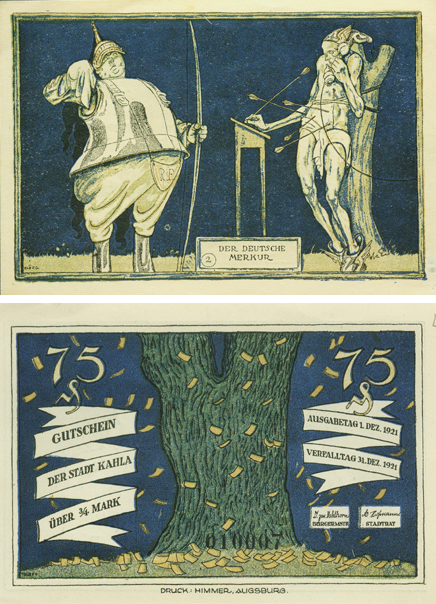
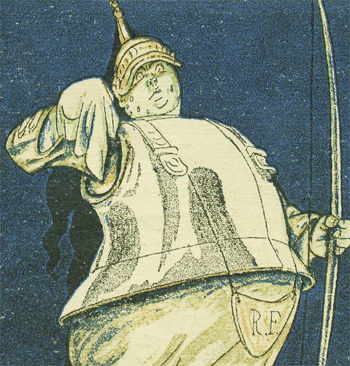
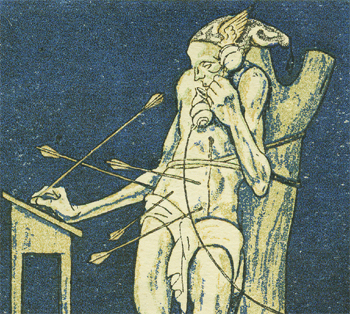
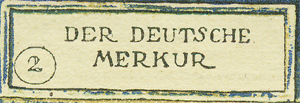
Gutschein der Stadt Kahla 75 pf. (Credit Note for the city of Kahla about 3/4 Mark or 75 pfennig): Depicted on the obverse: Corpulent man in armor with initials RF (Republic of France) sweating after shooting arrows at Mercury (Germany) still tied to a tree, still on the phone, taking orders (now in his own blood) for delivery of reparation payments: Der Deutsche Merkur (The German Mercury) / Depicted on the Reverse is a tree with notes falling like leaves / Ausgabetag 1, Dez. 1921 - Verfalltag 31, Dez. 1921 (Issued Dec 1, 1921 - Expires Dec. 31, 1921) / Signed by the Mayor and Council representative / illustration signed Olaf G. (artist: Olaf Gulbransson) |
DETAIL
|
Gutschein der Stadt Kahla 75 pf. (Credit Note for the city of Kahla about 3/4 Mark or 75 pfennig): Depicted on the obverse: Corpulent man in armor with initials RF (Republic of France) sweating after shooting arrows at Mercury (Germany) still tied to a tree, still on the phone, taking orders (now in his own blood) for delivery of reparation payments: Der Deutsche Merkur (The German Mercury) / Depicted on the Reverse is a tree with notes falling like leaves / Ausgabetag 1, Dez. 1921 - Verfalltag 31, Dez. 1921 (Issued Dec 1, 1921 - Expires Dec. 31, 1921) / Signed by the Mayor and Council representative / illustration signed Olaf G. (artist: Olaf Gulbransson) |
|
Kahla is a town in the Saale-Holzland district, in Thuringia, Germany. It is situated on the river Saale in the central Thuringian Saale valley.
With its beginnings in the early middle ages, Kahla has since been the victim of the ravages of war. Through its long history the castle and walls have been under siege, through the town Napoleonic troops marched, it was looted during the 30 years war, devastated by fires and the plague.
Its past is rooted in rural agriculture, small industry, and its market. In the mid 19th century, porcelain works opened in the town and it became a well known producer of china and home to some of the most talented China painters. Kahla also has a rich religious history as old as the town itself. It is home to the Church of St. Nicholas among others and Martin Luther visited the town to preach around 1525.
The town survived both world wars reasonably well though the people and businesses shared Germanys common war time woes. It would become a part of the GDR (East Germany) in 1943 and would remain so until Germanys reunification.
It remains today well known for its china, a modern town with a long rich history. |
